AquaProtein TriLoop™: Fish Pond Nutrient Conversion and High-Protein Crop Container System
AquaProtein TriLoop™ is a container system that treats nutrient-rich water from existing fish ponds and uses it to grow high-protein aquatic plants under controlled conditions. It links three things that are usually handled separately: pond water management, protein crop cultivation, and ongoing remote operation of the equipment.
Technology and Circular Process
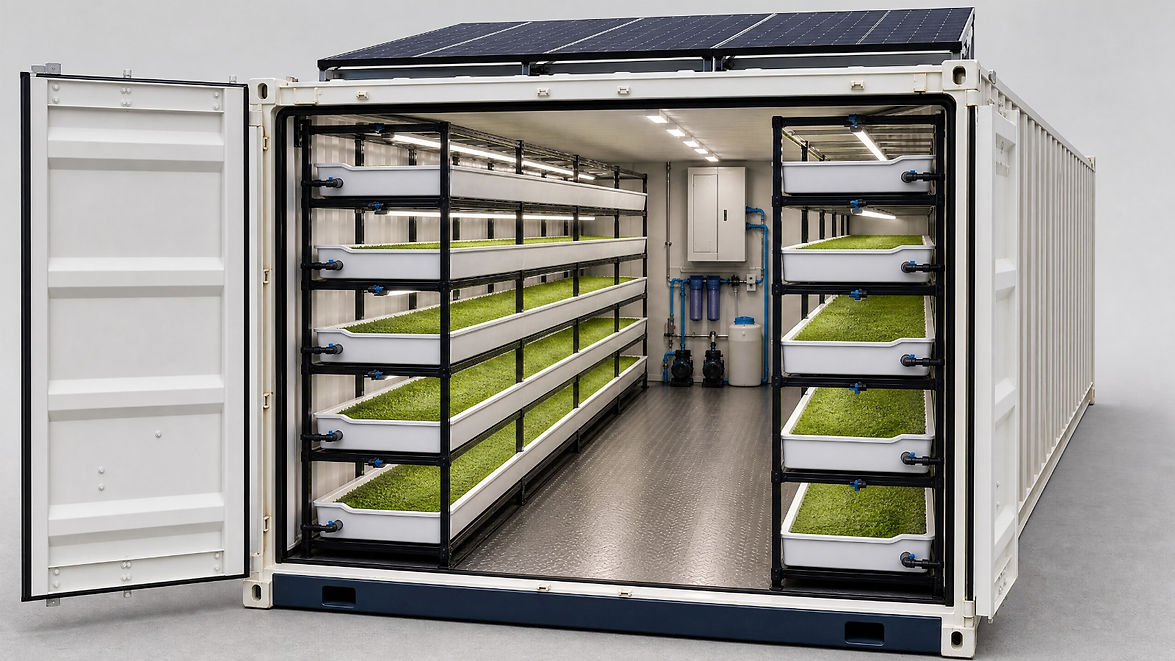
Pond water first goes through solid-liquid separation, filtration and recirculation, with water-quality sensors along the line. The treated water then becomes the nutrient source for cultivation, which reduces the fertiliser that has to be bought in. Inside the container, duckweed is grown on compact multi-layer racks under LED lights with adjustable spectrum, and the harvesting setup is built into the same unit. How the water is routed depends on water quality, the crop and its end use. Material intended for food keeps its own controlled water source, testing and release process, and every batch is recorded so it can be traced.


Modular Design, Energy Use and Remote Operation
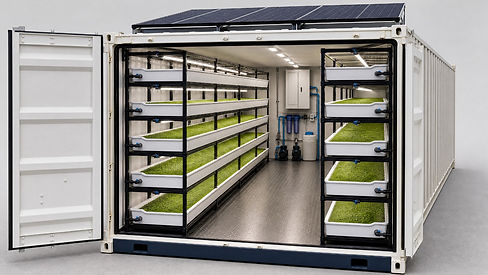
Each unit is a standardised container with piping, controls, sensors and lighting already fitted, which cuts down building work on site. The design aims for low net energy use. LED lighting, set light cycles and simplified temperature control keep the load down, and solar panels on the container roof supply part of the power for pumps, sensors and lighting. Energy use, solar contribution and output are design targets; they still have to be measured against the actual site, climate and equipment. The system is delivered as a plug-and-play package: process and instrumentation diagrams (P&ID), bill of materials, standard operating procedures, training, spare parts and a remote service arrangement. Water quality, equipment status, cultivation, batch and maintenance records go onto a remote platform that sends alerts and supports routine maintenance.
Demonstration and Next Steps
The first site is planned at a partner fish farm in Hengqin. It will be used to build and test the system, collect comparison data and refine the delivery package. Once the water handling, cultivation and maintenance records there are reliable, the package can be adapted to the conditions of other fish farms. Any deployment elsewhere, including across borders, depends on the site, power supply, import rules, maintenance arrangements and local compliance being confirmed first.